AI Impact on Jobs by Industry: What It Actually Means for Your Role
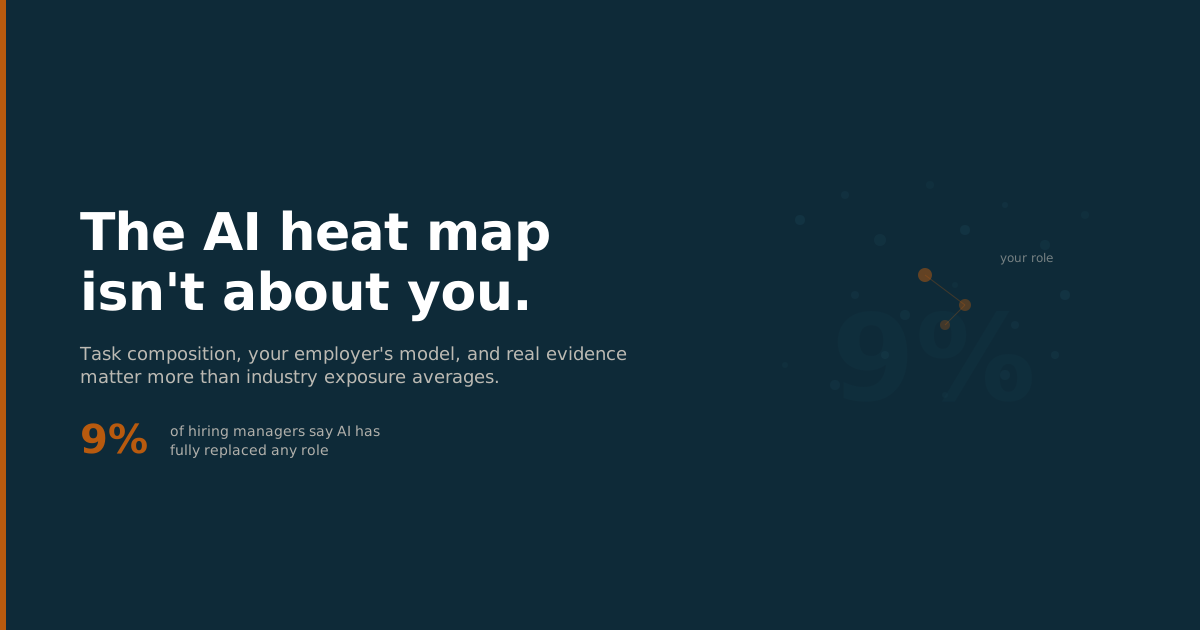
You've seen the charts. Industries ranked by AI exposure, your sector somewhere in the anxious middle, a percentage next to your job family that's supposed to tell you something about your future. After fifteen years of building a career, you're being asked to plan your next decade around a heat map.
Those rankings aren't wrong, exactly. They're just answering the wrong question for someone like you. Industry-level exposure scores describe averages across millions of workers, most of whom are earlier in their careers and doing more routine work than you are. What actually determines whether AI threatens your role isn't your industry. It's three things the rankings can't see: what your work is made of, how your employer is choosing to use AI, and whether the disruption stories in your sector are even real.
Let's take those one at a time.
Which industries are most affected by AI in 2026?
Office support, customer service, and routine data processing roles face the most direct displacement, with administrative roles showing the highest exposure in most analyses. STEM, legal, creative, and education roles are growing but changing fast. Healthcare, construction, and skilled trades remain least exposed. For mid-career professionals, role-level task composition matters far more than industry averages.
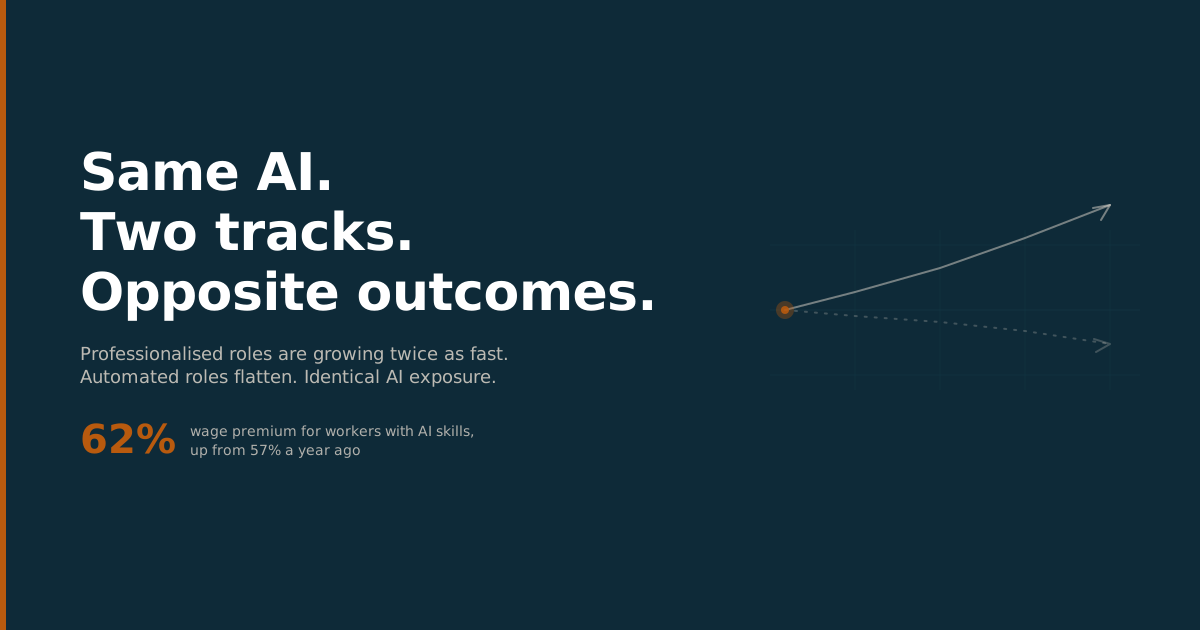
That's the consensus answer, and it's worth knowing. The World Economic Forum projects 92 million jobs displaced and 170 million created globally by 2030, a net gain that headlines rarely mention. But here's what changed in the past year: we stopped having to guess. Anthropic published research measuring AI's labor market effects from actual usage data rather than survey projections, and the early pattern is consistent with what Boston Consulting Group concluded in its 2026 analysis: AI is reshaping far more jobs than it replaces.
The displacement that is happening lands unevenly by career stage, not just by industry. Goldman Sachs data shows AI-driven job losses concentrating heavily among entry-level workers. The tasks AI absorbs first are the ones juniors used to learn on. If you have 8 to 20 years of experience, you're holding the judgment, context, and relationships that the data says are hardest to automate. Your risk isn't elimination. It's transformation you didn't see coming.
Related Articles
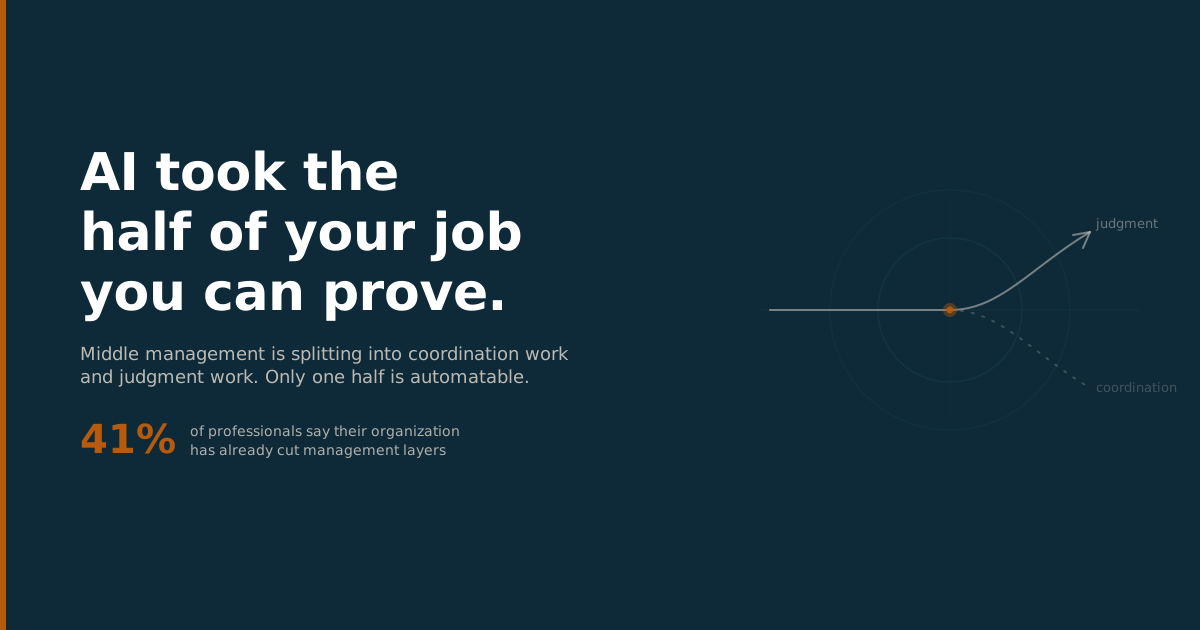
Middle Management Is Splitting in Two. AI Took the Half You Can Document.
AI is absorbing the coordination half of middle management: status reports, syncs, routing, first-pass review. It is not absorbing the judgment half. Here is how to tell which half of your week is which, and why your performance record probably documents the wrong one.
8 min read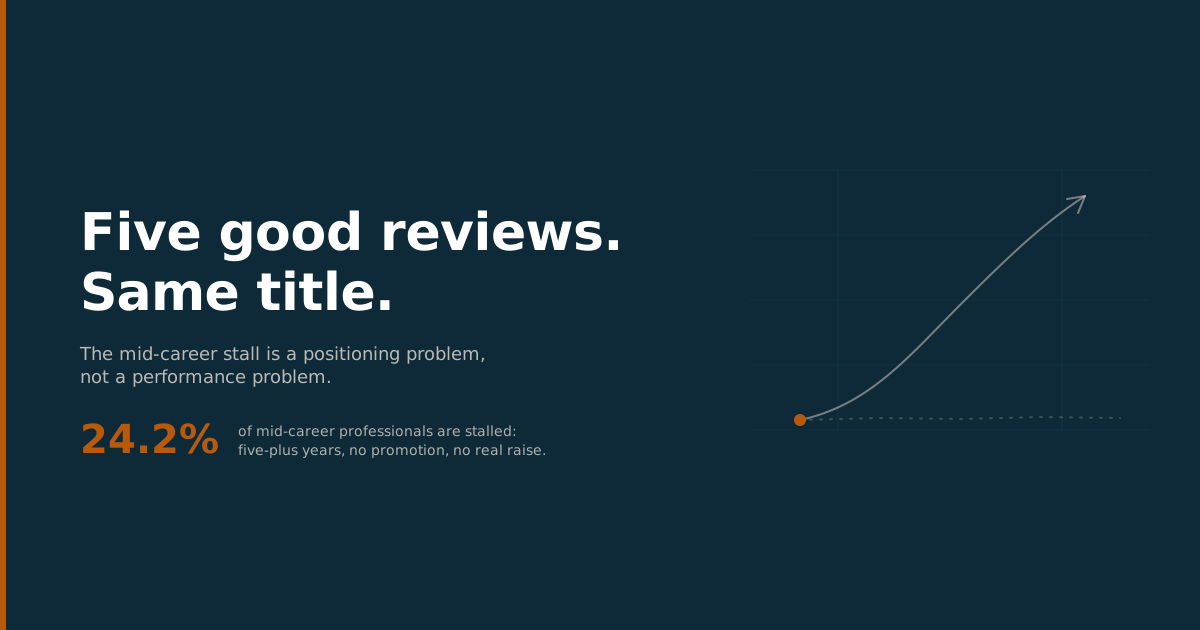
The Mid-Career Stall Is a Positioning Problem, Not a Performance Problem
Nearly one in four mid-career professionals is stalled: five or more years with no meaningful promotion and no real wage growth. The strongest predictor is not effort or talent, it is the seat you sit in. Here is how to diagnose it and the adjacent move that cuts stall risk by up to 86%.
10 min readKnow if you're a match before you apply
Paste the job. See your score — free, no account.