Job Search Tools
Analyze Any Job Posting: Know What It Really Requires
Before you spend an hour tailoring your resume, spend 15 seconds understanding the role. Decode what the requirements really mean, what experience level is actually expected, and what the culture signals suggest about the work environment. Free, no account required.
Your breakdown and match score in about 60 seconds
We don't store your resume without an account.
Free · No account needed · ~60 seconds
We don’t store your resume without an account.
The Decision
Should You Apply? Read the Posting First.
Job postings are marketing documents written by employers. They mix real requirements with aspirational wish lists. Some “required” skills are actually preferred, some “preferred” qualifications are dealbreakers, and the culture section rarely tells the full story.
Most job seekers read a posting and make a gut decision about whether to apply. They either apply to everything (wasting time on poor fits) or hold back from roles they could land (because the posting intimidated them).
Research shows that many qualified candidates, especially women and career changers, will not apply unless they meet 100% of listed requirements. But hiring managers typically expect candidates to meet 60-70% of what is listed.
Our analyzer helps you read between the lines: which skills are genuinely required vs. aspirational, what experience level the role actually targets, and what the culture signals suggest about the work environment. The goal is to make the apply/don’t-apply decision with real information, not a gut feeling.
4 Dimensions
What You’ll Learn
Every job posting contains more information than most applicants extract.
Skills Extraction
See which skills the role actually requires vs. which are wish-list items. We rank every skill by importance so you can assess whether your experience covers the essentials, even if you don't check every box.
Experience Assessment
Is this role at your level? We read past the title to assess what the employer actually expects: scope of responsibility, team leadership signals, and whether '5+ years' means entry-to-mid or senior-to-director.
Candidate Requirements
What does a strong candidate really need? We separate hard requirements (certifications, clearances, specific degrees) from soft preferences (nice-to-haves, cultural fit language) so you know what is non-negotiable.
Culture Signals
What would the day-to-day feel like? We detect pace indicators, remote flexibility signals, team structure clues, and values language that tells you whether this environment matches how you work best.
Who This Is For
Built for Professionals Who Evaluate Before They Apply
Professionals deciding whether a role is worth pursuing
You found an interesting posting but the requirements are ambiguous. Before investing time in an application, you want clarity on what the role actually demands.
Career changers decoding unfamiliar job postings
The industry is new, the titles are different, and you can't tell if "3-5 years of experience" means your 12 years count or not. A breakdown gives you the confidence to decide.
Job seekers who have been rejected without feedback
You've applied to roles you thought you matched and heard nothing. Understanding what postings really require helps you target roles where your experience genuinely aligns.
Anyone who has been told "you're overqualified" or "underqualified"
Those labels are often based on a surface read of your resume vs. the posting. An objective analysis shows you what the role actually needs, so you can position yourself accurately.
Simple Process
How It Works
Paste a job posting, add your resume, and see where you stand in about 60 seconds.
1. Paste the Job Posting
Copy the full text of the job posting and paste it into the analyzer above — or drop in a link to the posting. No account required, no signup. Works with postings from any job board, company website, or recruiter email.
2. Add Your Resume
Upload a PDF or paste the text. We don't store it without an account. Your resume is what turns a generic posting breakdown into a personal read: which requirements you already cover, and which ones need attention.
3. See Your Match and Decide
In about 60 seconds, get your match score, your top strengths for the role, and the specific gaps to close. Use it to decide whether to apply and how to position yourself — then create a free account to keep the analysis and generate a tailored resume.
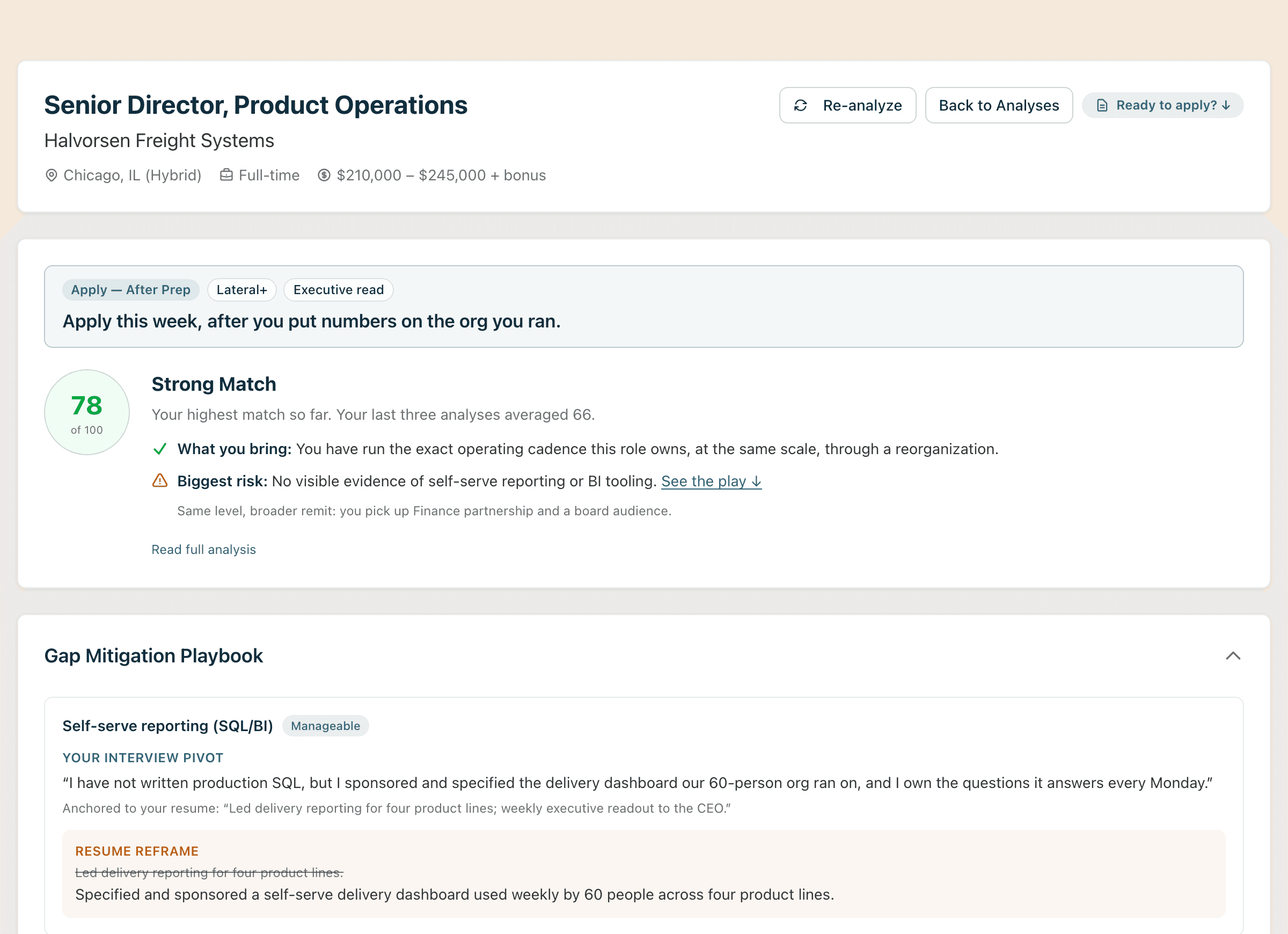
A full breakdown of what any job posting really requires, in under 15 seconds.
What Others Miss
Reading Between the Lines of Any Job Posting
Job postings are written to attract candidates. We help you read them to evaluate fit.
Every job posting is a compromise between what the hiring manager wants, what HR requires, and what the recruiter thinks will attract applicants. The result is a document that often obscures more than it reveals. Phrases like “fast-paced environment” and “self-starter” carry real meaning about workload and management style. Our analyzer surfaces those signals so you can evaluate the opportunity on your terms, not just the employer’s framing.
Next Steps
From Analysis to Action
Your job posting analysis is the starting point. Here’s how to act on what you learn.
Check your resume against what the role requires with the Free Resume Audit
Generate a tailored resume for this specific role with the AI Resume Builder
Write a cover letter that addresses the key requirements with the AI Cover Letter Writer
Talk through your job search strategy with an AI career coach
Your Coach
A coach in your corner

A coach in your corner
See your match score first — then Coach Maya can help you decide whether the role is right for you and how to make your move.
Related Tools
Explore More Job Search Tools
AI Resume Builder
Found a role worth pursuing? Generate a resume tailored to this specific posting from your career profile.
LinkedIn Profile Audit
Recruiters check your profile before they call. See how yours scores on positioning, narrative, and impact.
Free Resume Audit
Analyzed the posting? Now check your resume. See how it scores across four dimensions before you apply.
Applying to everything? Read why spray-and-pray job searching fails.
Common Questions
Frequently Asked Questions
Everything you need to know about analyzing job postings.
Start by understanding what the posting actually requires, not what it appears to require. Our analyzer separates required skills from preferred ones and assesses the real experience level. If you match 60-70% of the core requirements, you are likely a viable candidate.
It usually signals high workload, tight deadlines, and an expectation that you can manage competing priorities without close supervision. Our culture signals analysis detects these phrases and translates them into concrete expectations about the working environment so you can assess fit before applying.
In most cases, yes. Research consistently shows that hiring managers expect candidates to meet roughly 60-70% of listed requirements. Our analyzer helps you see which requirements are core to the role and which are aspirational, so you can make an informed decision.
Yes. Internal postings follow the same patterns as external ones. The analyzer extracts the same skills, requirements, and culture signals regardless of where the posting originated. This is especially useful when evaluating lateral moves or promotions within your own company.
When you add your resume, the analyzer scores your fit with the same five-category rubric as a full Modern Compass analysis: skills (30%), experience (25%), education (15%), certifications (10%), and culture fit (20%). You see your overall score, your top matching strengths, and the specific gaps to close before applying.
The analyzer works best with detailed postings. If a posting is unusually short or generic, the analysis will reflect that with fewer specific findings. A vague posting is itself a signal worth noting: it may indicate unclear role scope or early-stage hiring.
Decode Any Job Posting — and See Where You Stand
Paste a job posting for a free AI analysis. Understand what the role really requires, and get your match score before you apply.