Decision Fatigue Is Real: Here's How to Hit the Reset Button
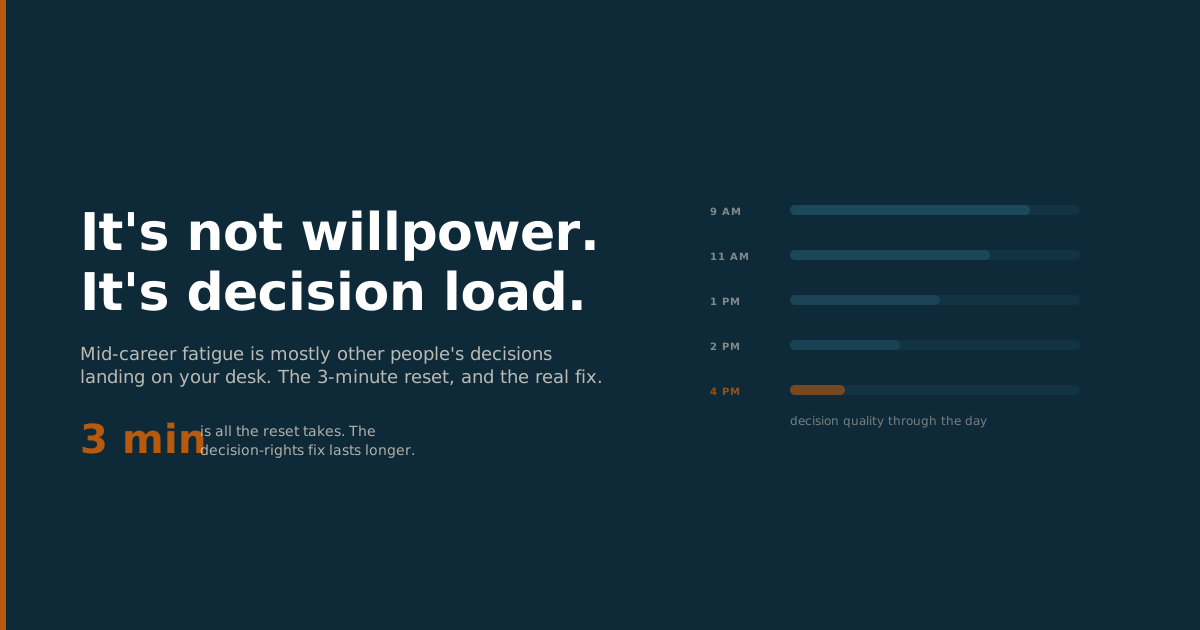
I learned about decision fatigue the hard way a few years ago. It was 4:30 PM on a Thursday, and I had been in back-to-back meetings since the morning. I needed to send a simple, clarifying email to a client. Instead of taking two minutes to write it thoughtfully, I stared at my screen for ten minutes, felt overwhelmed, and eventually sent a one-line reply that came off as rude. I spent the entire next morning doing damage control.
I wasn't a bad person. I was just empty.
Every article about decision fatigue will tell you the same three fixes: make big decisions in the morning, automate the small stuff like Obama's two suits, and take breaks. That advice works for the decisions you own. It does nothing for the reason mid-career professionals are actually drained, which is that somewhere between year eight and year fifteen, you stopped making your own decisions and started making everyone else's too.
What is decision fatigue?
Decision fatigue is the decline in decision quality that follows a long run of choices. As mental energy depletes, the brain shifts to shortcuts: impulsive calls, default options, or avoidance. It's a physiological pattern, not a character flaw, and it compounds at the mid-career level where decision volume is highest.
That last part is what the productivity blogs skip. A knowledge worker makes hundreds of meaningful calls a day. A manager of a team of eight makes their own, plus a share of everyone else's. The two-suits trick saves you a dozen trivial decisions. Your 2 PM calendar is costing you two hundred important ones.
The fatigue you feel is mostly other people's decisions
Audit one drained afternoon and you'll find the pattern. The decisions wearing you out are disproportionately ones that arrived from elsewhere: a direct report asking "how do you want me to handle this?", a stakeholder escalating something the team could settle, an approval request for a thing you approved in principle months ago.
Each of those exists because a decision right is ambiguous. Nobody agreed on who decides, so it floats upward to the most senior person willing to catch it. That's you. The exhaustion you're attributing to your biology is partly an org-design failure landing on your prefrontal cortex.
The fix is unglamorous and powerful: make decision rights explicit. For each recurring decision type that reaches you, ask whether it needs you, or whether it needs a rule. "Refunds under $500: support decides, no escalation." "Copy changes: marketing lead approves, I see it after it ships." Every rule you write retires a category of future decisions, permanently. That's leverage no morning routine can match.
Related Articles
7 Work-Life Balance Strategies That Actually Work at the Mid-Career Level
Work-life balance strategies built for the pressure of mid-career leadership. Practical tactics from a product leader who learned the hard way.
9 min read
Strategic Career Planning: Why Your 5-Year Plan Is Already Outdated
The 5-year career plan is a relic. Build a strategic career plan with shorter cycles, values alignment, and tools that reveal what you can't see on your own.
9 min readKnow if you're a match before you apply
Paste the job. See your score — free, no account.