The Career Audit: A Structured Way to Figure Out What's Missing
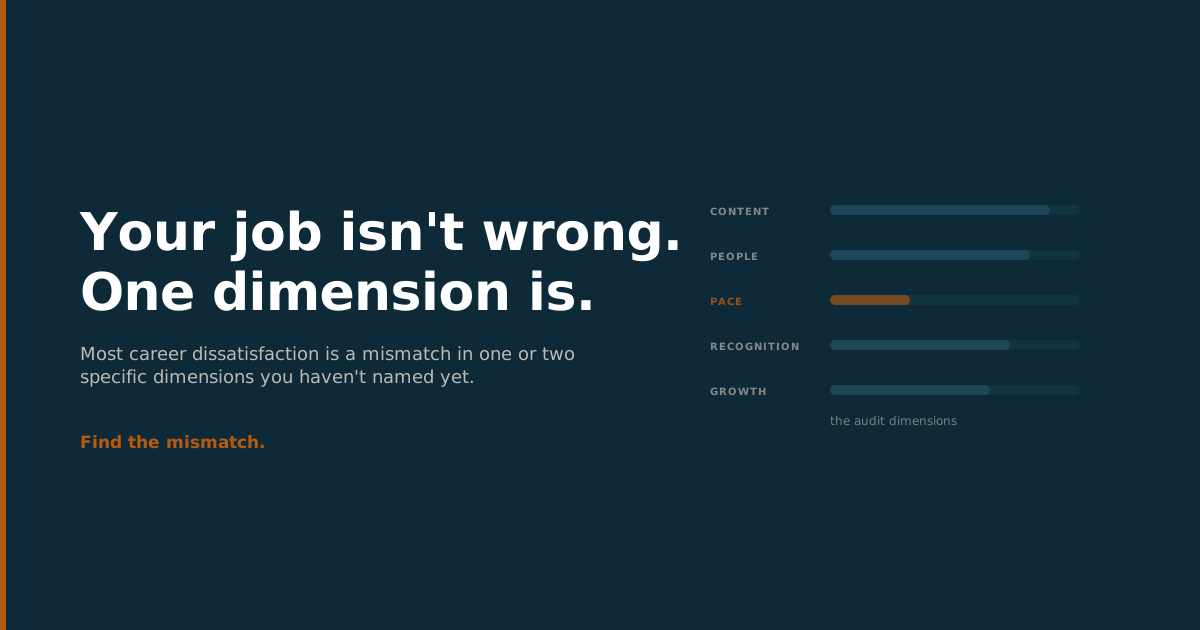
Most career dissatisfaction isn't about having the wrong job. It's about a mismatch in one or two specific dimensions you haven't identified yet.
Why We Misdiagnose Career Problems
Career dissatisfaction is like a check engine light. It tells you something is wrong, but it doesn't tell you what. And most people, when that light comes on, assume the whole engine needs replacing.
They don't. Usually one or two specific components are off, and those components are identifiable if you know where to look. The problem is that feeling unfulfilled creates a fog. Everything looks wrong through that fog. Your industry, your company, your role, your skills. It all blurs together into a general sense of this isn't working, which is accurate but not actionable.
What you need is a way to cut through the fog and examine each dimension of your career separately. That's what a career audit does.
The Five Dimensions
Every job, regardless of industry or level, can be broken down into five dimensions that affect how it feels day to day. When mid-career professionals are dissatisfied, the culprit is almost always a significant mismatch in one or two of these. Rarely all five.
Dimension 1: Content
What you actually spend your hours doing. Not your job title or department, but the literal tasks and cognitive work that fill your days. A marketing director might spend 60% of her time on budget management and vendor negotiations, which is operations work wearing a marketing hat. If she went into marketing because she loves creative strategy, that content mismatch will grind her down regardless of how good the company is.
Dimension 2: Context
The environment and culture surrounding your work. Company size, management style, pace, degree of autonomy, physical workspace, remote versus in-office, how decisions get made. Two people with identical roles at different companies will have entirely different experiences based on context. A product manager at a 50-person startup lives a different professional life than a product manager at Microsoft, even if the job descriptions overlap by 80%.
Related Articles
Work-Life Balance Is Dead. Long Live Work-Life Navigation
Balance asks if the scale is even. Navigation asks if you're headed somewhere on purpose. Four shifts for mid-career professionals, backed by boundary research.
6 min read
Decision Fatigue Is Real: Here's How to Hit the Reset Button
Decision fatigue isn't a willpower problem at the mid-career level. It's a decision-rights problem. The 3-minute reset, plus the fix nobody talks about.
6 min readKnow if you're a match before you apply
Paste the job. See your score — free, no account.